
New England is known for its rich history and breathtaking landscapes, but also for its architectural styles and rooflines that play a pivotal role in defining the region’s distinctive charm. In today’s blog, we’ll explore five of the most popular roof types and their key features that shape New England’s skyline, from Gambrel to the French-inspired Mansard.
Understanding Roof Pitch and Slope
Before diving into the most common rooflines found across New England, it’s essential to understand the terms “roof pitch” and “roof slope.”
- Roof Pitch: refers to the angle or steepness of a roof and is typically expressed as a ratio, indicating the vertical rise compared to the horizontal span (e.g., a pitch of 4:12 means the roof rises four inches for every twelve inches of horizontal distance).
- Roof Slope: describes the roof’s angle in a linear manner, often using degrees. This measurement is critical for determining how well a roof will shed water and snow, impacting the overall longevity and integrity of the structure.
To figure out your own roof pitch, you can use this handy Roof Pitch Calculator for quick and easy calculations.
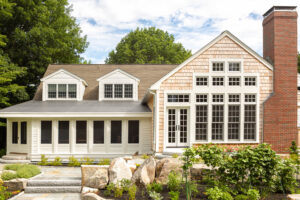
Transitional Farmhouse
By: Amy Dutton Home
Common New England Rooflines
1). Gambrel Roof: Often associated with barn-style buildings, the gambrel roof is a New England classic, and is not just limited to agricultural settings.
Key features include:
-
-
- Two slopes on each side; the lower slope is steeper than the upper.
- Maximizes interior space, making it ideal for finished attics or lofts.
- Offers a traditional, rustic aesthetic that compliments colonial and farmhouse-style homes.
-
This roofline is not only charming, but also provides practical headroom and storage solutions on the top floor.

Comprehensive Guide on Various Types of Roofs and Styles
By: Heaven Gables
2). Gable Roof: Arguably the most iconic and universally recognized roof style, the gable roof fits seamlessly into New England’s architectural landscape.
Key features include:
-
-
- Two sloping sides that meet at a central ridge, forming a triangle.
- Provides excellent water and snow runoff (crucial for New England winters).
- Encourages airflow and natural ventilation, keeping attics cooler in summer.
-
You’ll see gable roofs across a wide range of homes, from Cape Cod cottages, colonial-style homes, and modern builds, thanks to their versatility and timeless appeal.
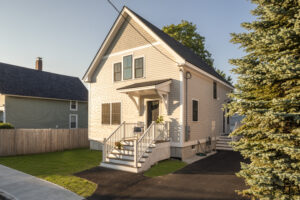
Tiny New Englander
By: Amy Dutton Home
3). Saltbox Roof: The saltbox roof stands out for its colonial ingenuity. Developed during the 17th century, this asymmetrical design helped homeowners maximize space without the need for costly materials.
Key features include:
-
-
- One long, steep slope on one side and a shorter, shallower slope on the other.
- Designed to combat heavy snowfall by encouraging efficient water runoff.
- Adds visual interest and a sense of history to a home’s exterior.
-
This roofline gives homes a charming, historical silhouette and allows for creative interior floor plan layouts, especially in homes with sloped ceilings or half-stories.
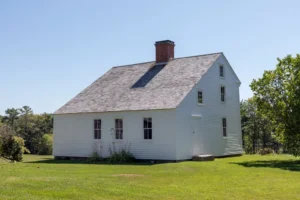
The History Behind the Saltbox House (and Its Unique Roofline)
By: Better Home & Gardens
4). Hip Roof: Known for its structural durability, the hip roof is a go-to choice for homeowners seeking a balanced design.
Key features include:
-
-
- All four sides slope down toward the walls, typically at the same pitch.
- More stable than gable roofs in high-wind or heavy snow environments.
- Offers the potential for vaulted ceilings or a central attic space.
-
In New England, where storms and snowfall are common, the hip roof stands out for its wind resistant, symmetrical design.
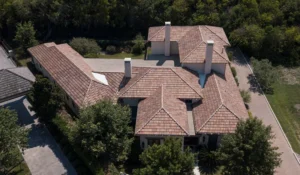
Gable Roof vs Hip Roof Differences: An In-Depth Comparison
By: Presidio Roofing Company of San Antonio
5). Mansard Roof: With roots in French architecture, the mansard roof brings a touch of European sophistication to New England and is especially found in Victorian style homes.
Key features include:
-
-
- Four-sided roof with two slopes on each side; the lower slope is much steeper and often includes dormer windows.
- Maximizes usable space on the top floor, often adding a full extra story.
- Often features ornate trim, brackets, and dormer accents.
-
This elegant design is decorative yet functional, and allows for additional living space up top without significantly altering a building’s footprint.
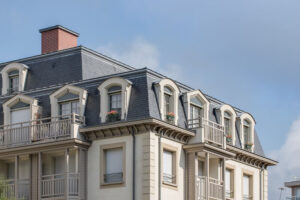
The Secret Behind the Origins of the Mansard Roof: a French Story
By: Cupa Pizarras
Building Your Dream Roofline
So, whether you’re drawn to the barn-inspired gambrel, or the clean lines of a gable, your roofline should be both beautiful and built to last. With over 30 years of experience designing rooflines, we’re here to bring that expertise to your project and help elevate your home for generations to come. Ready to renovate or start from the ground up? Book a free 15-minute consultation with us to get started!
