
Wondering how much your renovation or new construction project is going to cost? You’re not alone. It’s one of the most common questions we get, and also one of the hardest to answer right away. The truth is, figuring out a project’s cost is a process. A thoughtful, layered, sometimes messy (but always necessary) process. So let’s walk through it together.
Why Pricing Isn’t a One-Track Conversation
Over the past few weeks, we’ve had conversations with a number of potential clients, and a recurring frustration keeps coming up: why can’t you just tell us how much our project will cost?
We get it. You want clarity and you want it fast. But here’s the thing: determining how much your project will cost takes time, information, and yes, some financial investment, especially when we’re talking about a custom project.
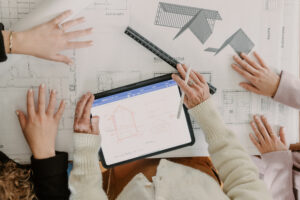
When it comes to an Amy Dutton Home custom renovation or new construction project, the final construction cost evolves over the course of your project, from schematics to your move-in date. That’s not because we want it to be; it’s simply the reality of custom design and construction in today’s market. Ultimately, our role as designers is to guide our clients towards a design that works for both their lifestyle and budget restrictions. While we do not perform the construction work and thus cannot provide construction estimates, we do have a keen sense of the general price per square foot that we keep in mind as we design and make material selections.
So, What’s the Process?
If you’re considering a renovation or a new construction design project with Amy Dutton Home, here’s how we guide you through the process, step by step:
1). Initial Conversation: To make that first inquiry with us, you can fill out the contact form on our website or give us a call at 207-703-0696. What we are initially looking for is a sense of the scope of your project: How much needs to be designed? Is this just a kitchen reno or a 3000sf tear-down? How much is your construction budget? What is your timeline to start?
2). Site Visit & Next Steps: From there, we’ll either meet on-site or decide to continue our conversations virtually.
-
- An On-Site Consultation is approached by Amy like an interview. She’ll come to your house and walk through everything you hope to do, as well as review any documents or materials you have on hand. If you have already enlisted a builder, this would be a great chance for us to meet them! Following this consultation, Amy will draft a Memorandum of Agreement (MOA) which will include an Estimate for Services. We review this MOA together in a meeting to ensure all of your concerns are addressed by the design scope and you understand the associated design costs.
- We may refer you to our Virtual Design Services through Amy Dutton Unfold, depending on the scope, through which Amy works with clients virtually. After a brief consultation, we’ll provide an estimate for design services, which typically range from $5-7k for a full construction drawing set.
Not sure which path makes sense? Simply give us a call or send Elle ([email protected]) an email with your project details and she’ll book an initial call!
Just to be clear: this estimate covers design services only—not the full project cost. But based on your goals, we’ll give you a general ballpark of where we think you’ll land cost-wise. For example, if you’re reworking your layout and updating a kitchen and powder room, you might be looking at $150K-$300K total construction investment. It could be more, but definitely won’t be less than $50K.
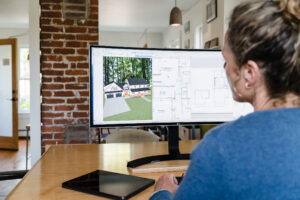
3). Sign & Start: We’re always aiming to provide the best services to our clients, which means that as a team of three, we spend a lot of time upfront to decide whether or not we’re the right fit for projects that come our way. Once you sign the agreement, we’re off and running. Our fees are firm and fair—we don’t negotiate them. The only way to lower the cost would be to adjust the scope of work.
4). Discovery Phase: We begin by measuring your existing space and drawing it into our CAD system. Then comes the first version of your design (V1). Once that’s ready, we meet to review and revise in real-time, kicking off Version 2.
At this stage, we usually recommend bringing a contractor on board. I know it’s early, but having your builder in the loop helps ensure we’re designing with your budget in mind. It also creates a strong team dynamic from the start.
5). Schematic Design: This is where things get fun. We’ll explore your project in both 2D and 3D, and collaborate to bring your vision to life. We bounce around ideas, make refinements, and work toward a design that feels just right. Depending on where you live, we will design to a point that gets you ready for permitting. While we do not present to town boards on behalf of our clients, we’re 100% committed to safeguarding you with every detail you need.
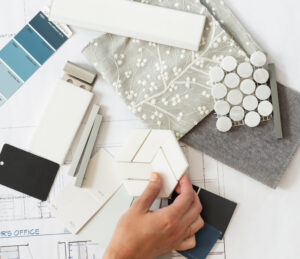
6). Material Selections: There are a few different ways we can handle materials, depending on how hands-on you want to be:
-
- We can make all the selections for you, with your approval. This is our preferred way of working with our clients as we know both associated costs and vendor reputation. Trust us, this is also your builder’s preferred option.
- We can offer three curated options and let you choose.
- Or, you can take the reins, and we’ll make sure it all comes together beautifully.
7). Construction Drawings: Once we’ve locked in design, materials, and permits (and you’re confident there won’t be any changes) we finalize the construction drawings. These are detailed, technical, and we want to get them right the first time around. This process will take the most time, and thus cost you the most in terms of design fees. The best way to keep this cost down is to make sure that communication is deliberate and consistent.
8). Ongoing Coordination: Throughout the design process, we keep checking in with your contractor to make sure the budget and timeline are staying on track. By the time construction begins, you’ll have everything selected, drawings complete, and (hopefully) peace of mind.
It’s true, designing and building a home is a big investment of time, money, and emotion. When you have a solid guide through the process, a great team, and the right expectations in place, it doesn’t have to feel overwhelming. If you’re still unsure about how all of this applies to your project, let’s talk! We’re happy to answer questions or hop on a quick call to help clarify the next best steps.
*A note on working with assessing your quotes from builders:
You might be surprised to learn that most contractors don’t offer fixed prices anymore. Why? Risk.
Between inflation, supply chain hiccups, and fluctuating material costs, especially at lumberyards, locking in a price more than 30 days out just isn’t realistic. Contractors can’t afford to gamble on numbers that might shift dramatically by the time a project begins. This means that your builder will likely provide a Cost-Plus contract based on actual costs plus an industry-standard 15% fee. If you expect a hard number upfront, a Fixed-Fee contract may seem more in alignment with your expectations, but just know that additional costs will be incurred, they will simply be charged as ‘Change Orders’ down the line.
