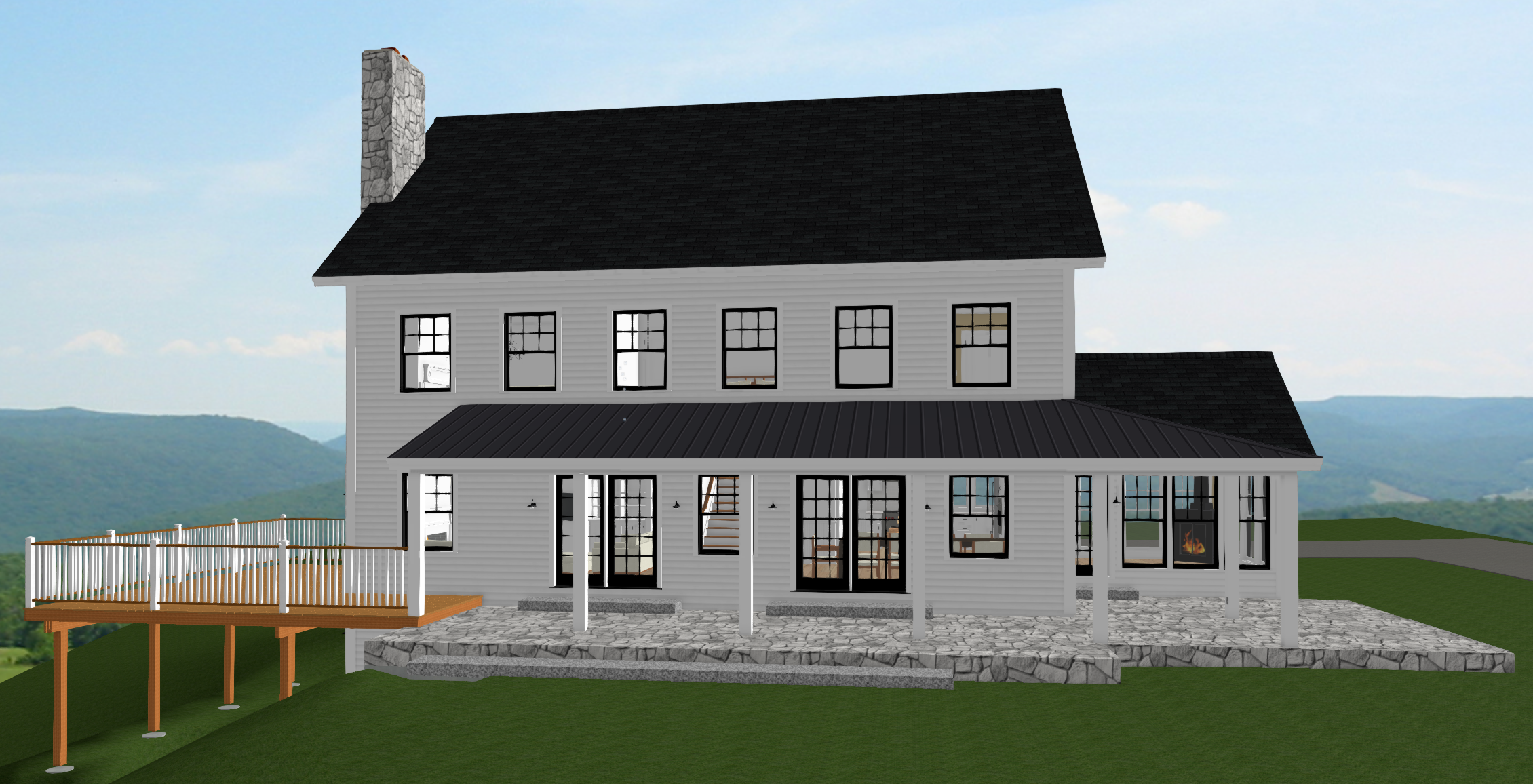
Have you ever wondered how the interior layout of a home connects to the exterior architecture? The truth is that it’s never a simple one-way process. It’s more like the classic “chicken and the egg” scenario — both sides influence each other, and the design evolves through continuous back-and-forth collaboration.
Whether I’m designing a modern farmhouse, coastal home, or traditional New England build, the relationship between interior and exterior design is a layered, thoughtful, and highly intentional process. Here’s how the pieces come together.
1. Establishing the Main Footprint
Every home starts with one essential decision: the footprint. This is the base shape of the home and sets the stage for every interior and exterior choice that follows.
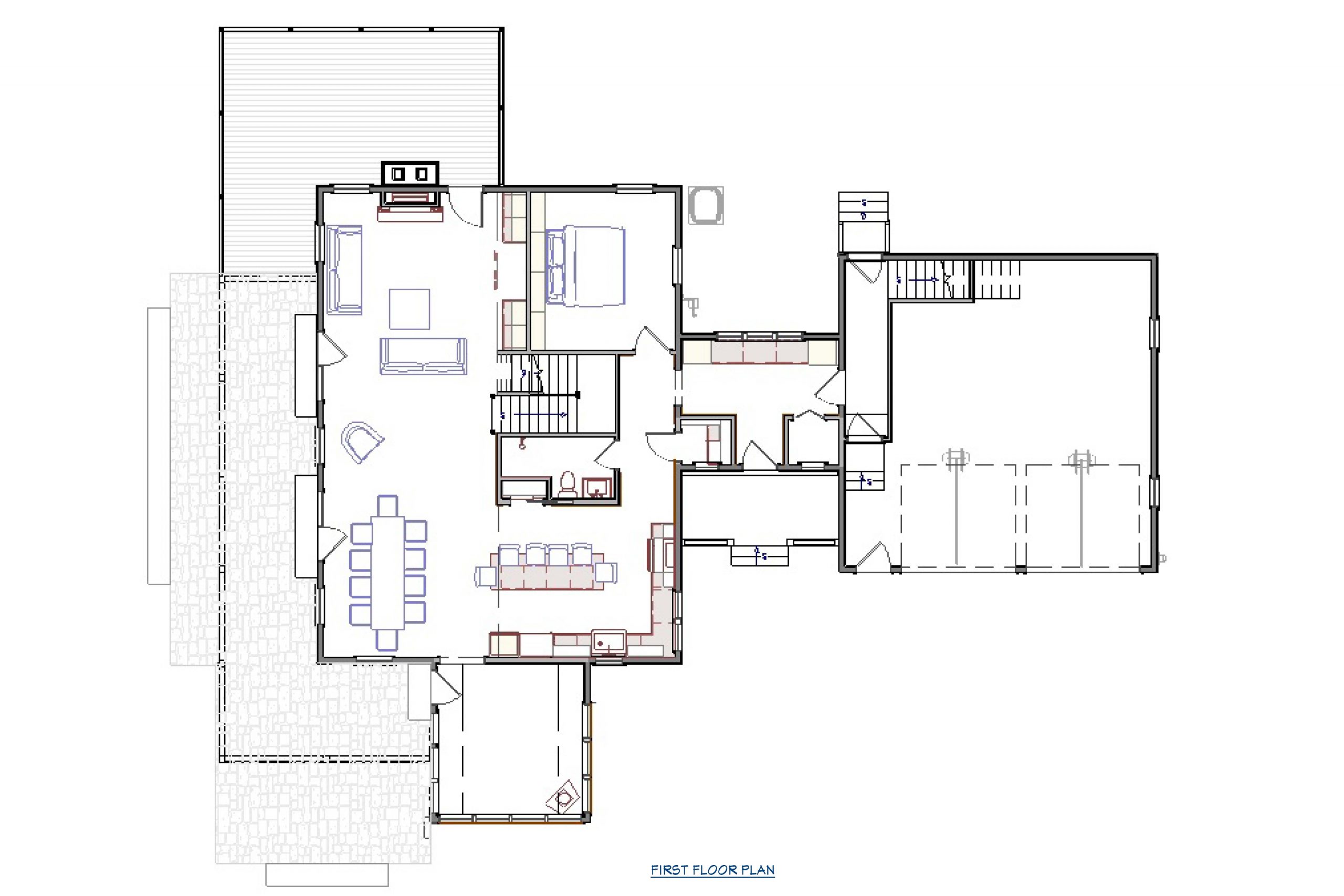
For a farmhouse-style home, we typically begin with a simple rectangular footprint for the main structure. From there, we determine which rooms must live on the first floor. In this example, the requirements included:
-
kitchen
-
dining area
-
living room
-
powder room
-
first-floor bedroom or office
These rooms must fit comfortably within the footprint while still supporting good circulation, natural light, and future furnishings. Once the first floor feels balanced and functional, we place the second-floor massing on top of it.
2. Designing the Second Floor
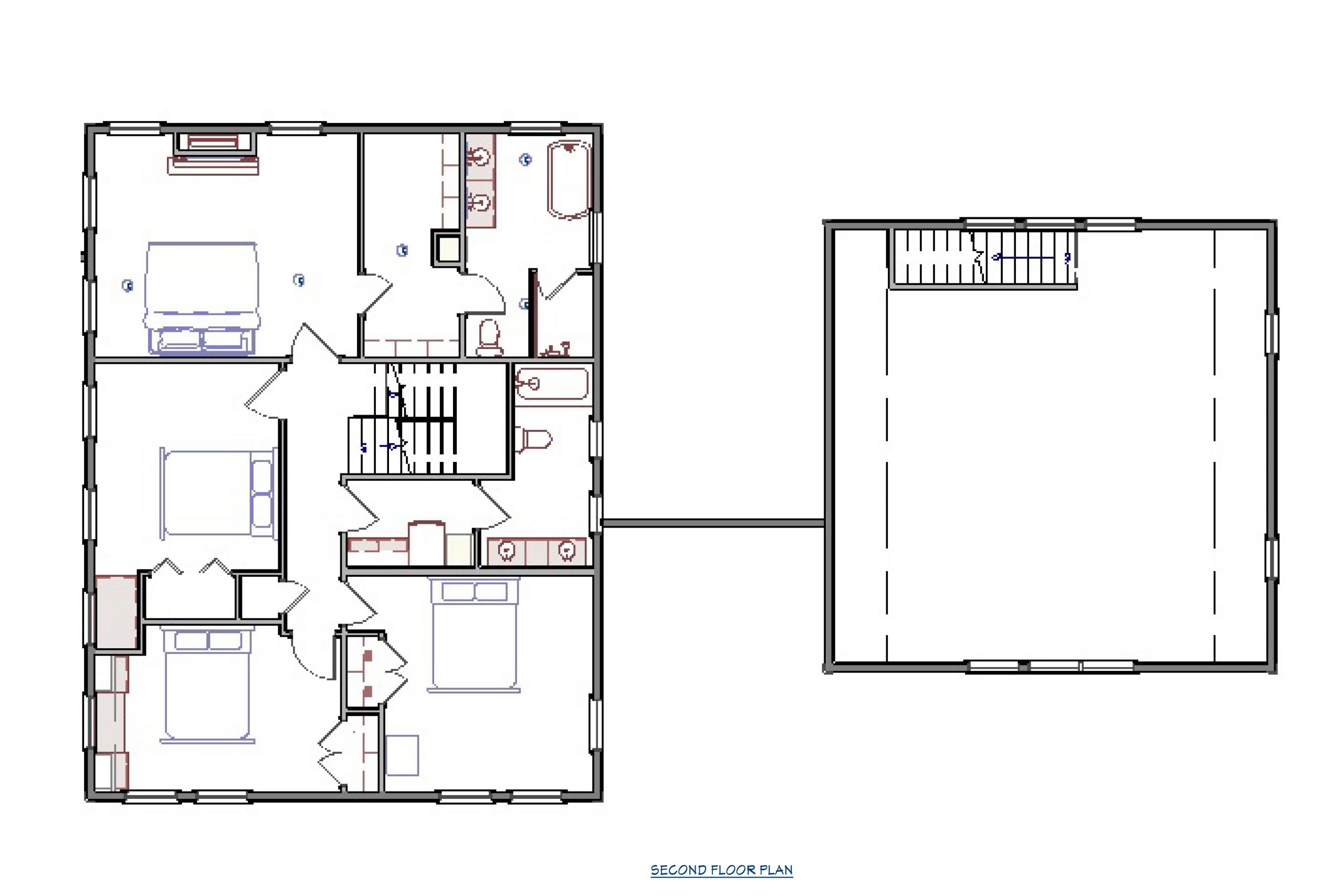
With the basic massing in place, we design the upstairs layout. Farmhouses traditionally use gable rooflines, which creates predictable ceiling heights and simplifies the structure. But that also means the window placement on the first floor directly informs the room layout above.
In this project, the second floor includes:
-
a primary suite
-
three bedrooms
-
a full bathroom
-
a laundry room
To keep the layout functional, we use a central hallway with bedrooms positioned on the perimeter so each has access to natural light. Because we established the windows earlier, the bedroom placement adjusts to align with those openings.
This is where the “chicken and egg” dynamic happens — exterior elements like roof pitch and window location shape the interior, while interior needs may shift windows or roofline details in return.
3. Adding Architectural “Wings” and Extensions
Once the main massing feels right, we explore the architectural additions that make the home more functional and more beautiful. These complementary structures are influenced by:
-
lifestyle needs
-
natural light
-
site orientation
-
views
-
budget
-
the home’s overall architectural language
For this farmhouse, several additions were essential:
Farmer’s Porch
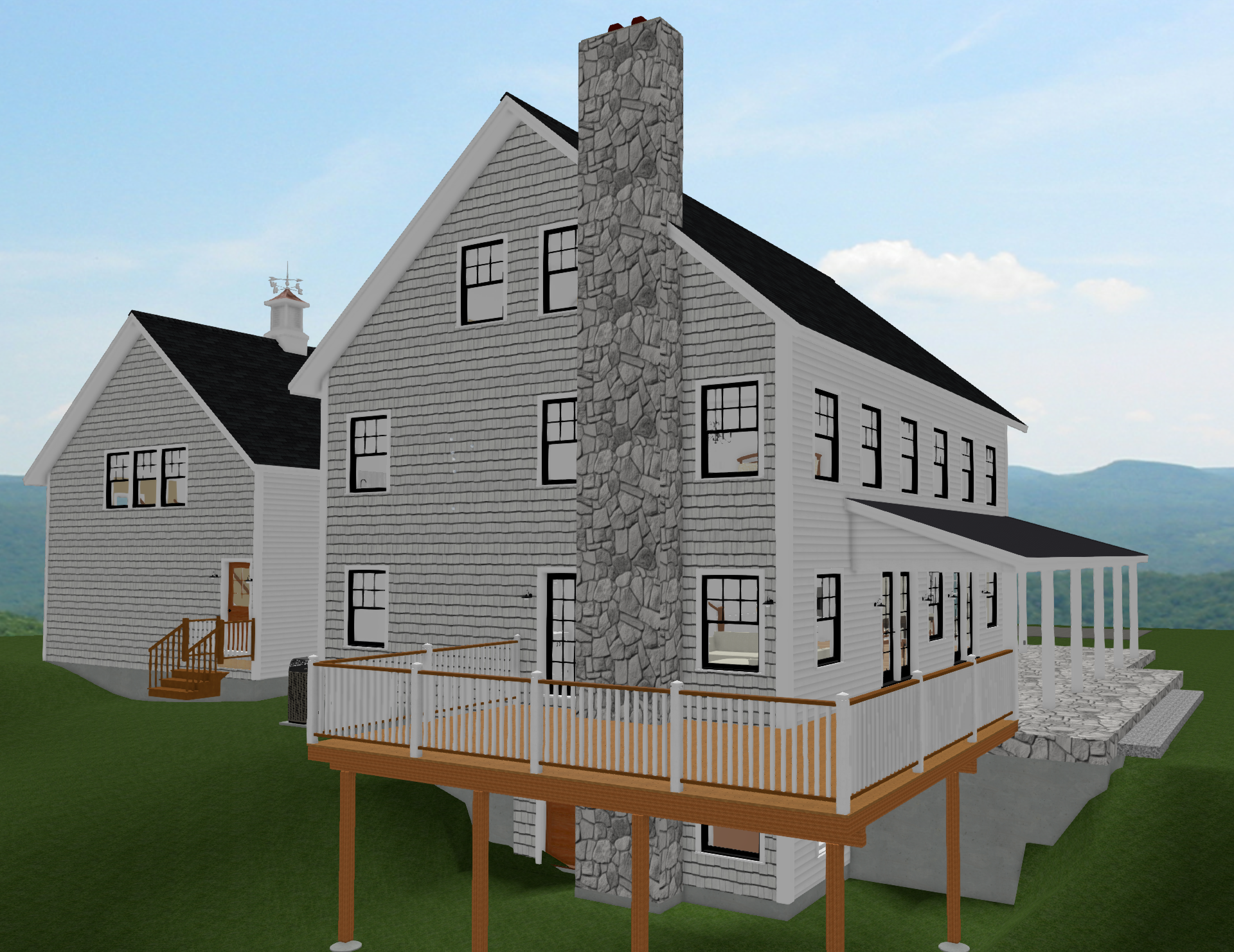
Farmhouses often feel incomplete without a generous porch. In this design, the porch wraps the front and side of the home to:
-
create welcoming curb appeal
-
extend indoor-outdoor living
-
take advantage of afternoon sun
-
connect seamlessly to the patio and deck
Large French doors were placed along this elevation to bring light inside and allow easy access outdoors.
Sunroom
The sunroom was strategically positioned on the front/side of the home to capture sunlight throughout the day and highlight exterior views. Because it sits adjacent to the farmer’s porch, the spaces flow visually and physically, enhancing the overall experience.
Mudroom + Garage Connection
Functionality matters as much as beauty. The mudroom forms a transition between the main house and the oversized garage, offering:
-
storage
-
drop-zone functionality
-
weather protection
-
access to the space above the garage, planned for future living space
This entire wing was placed on the north side — a thoughtful move that preserves southern and western sunlight for the spaces where it matters most.
4. Bringing the Interior and Exterior Together
As these elements evolve, we continuously refine:
-
window placement
-
room proportions
-
outdoor connections
-
rooflines
-
siding details
-
porch dimensions
-
interior sightlines
-
natural light pathways
The interior and exterior must feel like one cohesive idea — not two separate design processes. When the structure, layout, light, and flow all work together, the result is a home that feels effortless, balanced, and welcoming.
Designing a home is not about choosing interior finishes first or finalizing the exterior upfront. It’s a layered, interconnected process where each decision reinforces the next. Through thoughtful planning and a holistic approach, you end up with a home that is functional, efficient, grounded in the site, and truly beautiful inside and out.
If you’re considering designing or building a home and want support from an architect and interior designer who understands both sides of the process, I would love to help you bring your vision to life.